
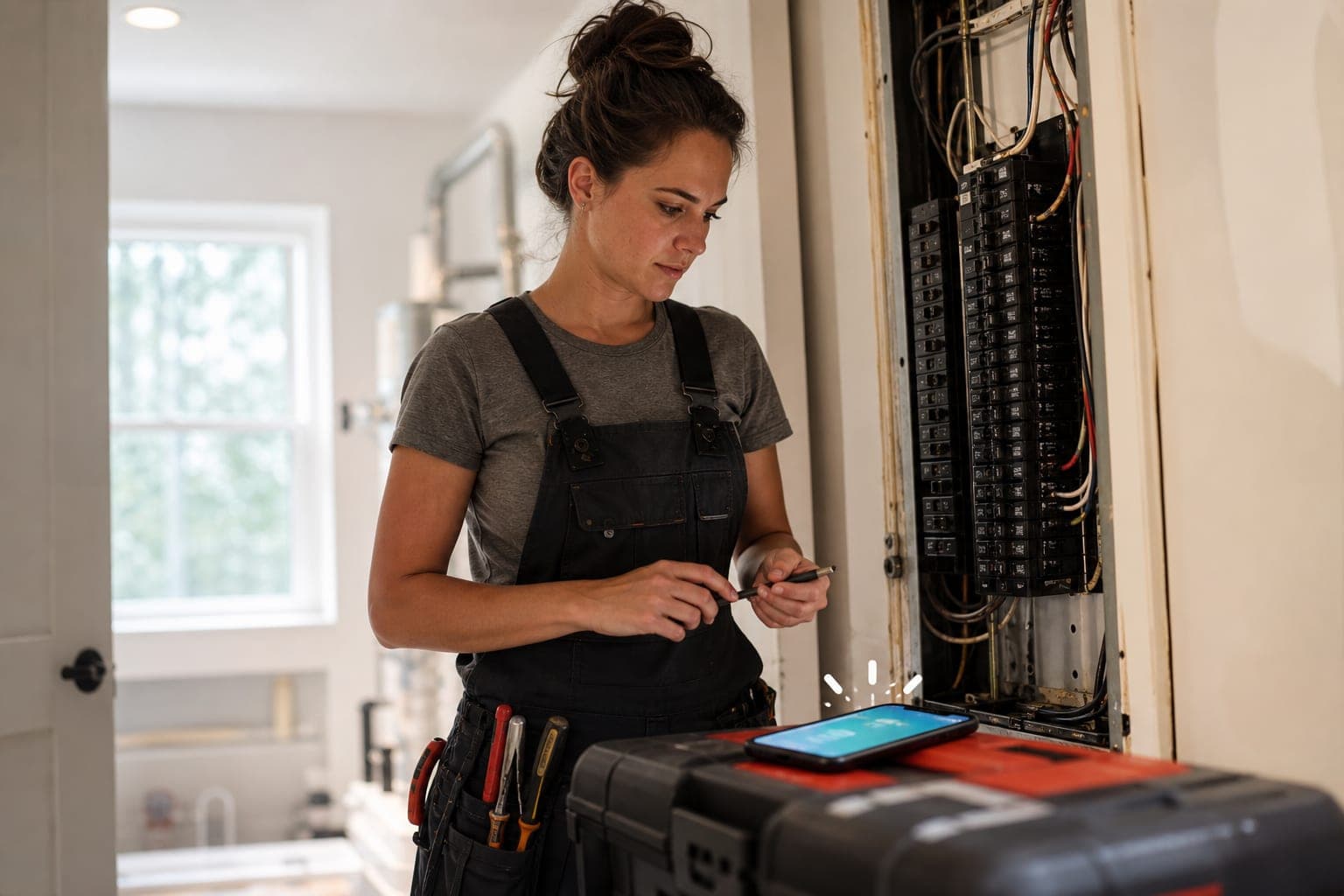
Best Answering Service for Electricians in 2026
Compare answering services built for electrical contractors. AI vs live, pricing, emergency routing, and how to test each option before you commit.
Best Answering Service for Electricians in 2026
Electricians face a unique problem: you can't answer the phone while you're on a ladder.
Whether you're rewiring a commercial building, troubleshooting a panel, or diagnosing an outage, picking up calls isn't an option. But missed calls can cost you jobs. Emergency and service work is often among the best-paying work an electrician does, and a caller who reaches voicemail may simply try the next electrician on the list.
This guide compares answering services built for electrical contractors, explains why electricians need them, and shows how to test live operators and AI on your own call log before you commit.
Why Electricians Need a Specialized Answering Service
The Problem: You Can't Answer While Working
Unlike office-based businesses, electricians are always on a job.
The reality:
What one missed call can cost you:
Count the calls your shop misses in a typical week and you will see how quickly this adds up.
Types of Calls Electricians Miss
Not all calls are equal. An answering service needs to handle:
Emergency calls (highest urgency):
These often lead to follow-up work.
Service calls:
These are everyday calls with potential for upgrades.
Quote requests:
These can lead to larger jobs if you follow up quickly.
Commercial calls:
Commercial work often means repeat accounts.
Types of Answering Services for Electricians
Option 1: Live Operator Services
How it works:
A human receptionist answers your calls, takes messages, and either schedules appointments or transfers calls to you.
Cost: Typically billed by the minute or the call. Published entry plans run roughly $129 to $325 a month for 50 to 100 minutes, with extra minutes billed on top.
Pros:
Cons:
Reality: A busy electrician can get a call at 2am when someone's house loses power. Check whether a live service covers overnight hours and whether that costs extra.
Option 2: AI Phone Systems (Modern & Specialized)
How it works:
An AI receptionist answers your phone, picks up electrical context (panels, breakers, circuits, urgent wording), and either books an available appointment slot or sends you the job details (by text if you turn on text alerts).
Typical cost: $149-499/month (included minutes, then a published per-minute overage)
Pros:
Cons:
Reality: Test it yourself first. Many callers would rather get a fast answer at 2am than reach voicemail, but you should hear how it sounds on your own calls.
Cost Comparison: Live vs AI
| Metric | Live Operator | AI Receptionist |
|---|---|---|
| Monthly Cost | About $460 in the example below | $149-499 |
| Per-Call Cost (100 calls/mo) | About $4.60/call in the example below | $1.49/call on Solo (100 calls of about 3 minutes) |
| 24/7 Availability | Varies by plan | Yes, included |
| Scheduling | Depends on the operator's access to your calendar | Books into available slots on your schedule |
| Emergency Handling | Depends on training and your instructions | Urgent wording flagged and routed to you |
| After-Hours Coverage | Varies by plan; some charge extra | Same plan, no after-hours surcharge |
| Setup | Ask the provider | Forward your number, add your calendar |
| Electrical Knowledge | Ask how operators are trained | Built around trade vocabulary |
The example behind the live column: MAP Communications Pay As You Go, a published live plan at about $49 a month plus about $1.37 a minute, with 100 calls a month of about 3 minutes each. That is $49 plus 300 minutes at $1.37, or about $460 a month. Callbook Solo covers the same 300 minutes inside its 300 included minutes for $149. The price gap in this example is about $3,700 a year. It is the difference between one published live plan and one software plan, not a like-for-like saving, and your own call volume will move it.
Price your own month of calls
Take a recent month from your phone system. Count answered calls, total minutes and after-hours transfers, then ask each provider to price that workload in writing. For per-minute quotes, check rounding per call and after-call work. For per-call quotes, ask how transfers and repeat callers count.
For example, 100 calls averaging 4 billable minutes use 400 minutes. On Callbook Solo, the base fee is $149 for 300 minutes. The remaining 100 minutes at $0.40 bring the example total to $189 before taxes. A shop with shorter calls or more transfers can get a different result. See current plans and overage rates.
How Electrical AI Answering Works
Here's what happens when a customer calls an electrician using AI:
Scenario: Panel sparking at 2am
1. Customer calls at 2am (you're asleep)
2. AI answers immediately
3. AI greeting: "Thanks for calling [Your Company]. Are you calling about an emergency electrical issue, or do you have a question about an estimate?"
4. Customer: "My panel is sparking and it smells like burning plastic"
5. AI recognizes urgent wording, asks for the location and a callback number, can transfer the caller to your cell if you have set that up, and alerts you:
- "URGENT: Panel sparking/burning smell at 456 Oak Street. Callback: (555) 123-4567"
6. You respond based on the instructions you set for urgent calls
7. The customer is booked into an available slot, or you call back and arrange the visit
8. You dispatch with the address, the problem and the callback number already in hand
Scenario: Quote request during business hours
1. Customer calls during your work day
2. AI answers: "Are you calling about an emergency, to schedule service, or to request a quote for new work?"
3. Customer: "I want a quote for rewiring my basement"
4. AI:
- Gets the location and scope (basement rewiring)
- Checks your calendar
- Offers available appointment times
- Books an available appointment slot
5. You arrive with the details instead of chasing the lead
6. Dispatch sees the scope and address before the visit
Why Electricians Are Switching to AI
1. Always Available (Including 2am Emergencies)
Not every live service answers at 2 AM, and some charge extra for nights and weekends. An AI receptionist answers at any hour at the same plan rate.
Every emergency call you reach is a chance to win the job. Review a few weeks of missed calls to see how many came in at night or while you were on a job.
2. Understands Your Trade
AI systems built for trades recognize:
Generic services tend to treat all calls the same.
3. Costs That Are Easier to Predict
A live operator's bill follows your minutes, so it climbs in a busy month and in a slow month it still carries the plan's base price.
AI plans include a block of minutes, and extra minutes are billed at a published rate ($0.40 a minute on Solo). Price your own call log, as in the example above, to see where you land.
4. Fewer Scheduling Mix-Ups
AI offers and books only open slots on your schedule, so it checks availability before it confirms a time.
With a live operator, ask how they see your calendar and who fixes a double booking.
5. Connects to Your Calendar and Books
Callbook connects to:
Result: Call details land in your dashboard and calendar without retyping them.
Choosing the Right Answering Service for Electricians
Questions to Ask Before Signing Up
1. Is emergency detection included?
2. Can it book real appointments?
3. Is it 24/7?
4. How does it deliver jobs?
5. What's the actual cost?
6. Does it work with the calendar you already use?
Three test calls to make before choosing a provider
A homeowner asking for an EV charger estimate needs a different appointment from a property manager calling about an existing service visit. Ask each provider to handle both calls. The calendar entry and the note your dispatcher receives will tell you more than a list of features.
| Test call | What to ask | What your shop should check |
|---|---|---|
| Installation estimate | "I want a quote for an EV charger. Can someone come Thursday?" | Block one Thursday slot before calling. Check that the receptionist offers an available estimate window and leaves equipment pricing and installation timing to the electrician. |
| Repeat caller | "I'm the tenant. My landlord booked the visit, but I'll be there to open the door." | Check that the service address, unit, access contact and billing contact are clear. Look for a duplicate booking or a change made to the wrong visit. |
| After-hours callback | "I'm a property manager following up on a service request. Can the on-call electrician call me?" | With your team's agreement, let the test transfer go unanswered. Check the fallback destination, the callback number and whether anyone promised an arrival time. |
Use fictional names, a test number and a calendar slot your team controls. A receptionist can record what a caller reports and follow the shop's escalation instructions. A reported immediate danger belongs with emergency services. A booking agent should never diagnose a hazard over the phone or tell a caller that emergency help is unnecessary.
Is an Answering Service Worth It for Electricians?
Quick answer: it depends on how many calls you are missing, so measure that first.
A simple way to check:
That gives the owner a way to decide whether to expand from overflow coverage to the main line.
Getting Started with an Electrician Answering Service
1. Choose Your Service Type
2. Set Up Your Phone Number
3. Customize Your AI's Behavior
4. Test It
5. Go Live
What Changes for Electrical Contractors Using AI Answering
Emergency Triage: What Should Route to 911, the Utility Company, or You
Not every call that sounds like an emergency needs to reach you first. A downed power line, active arcing, or visible smoke with flame needs 911 and the utility company immediately—no answering service, AI or human, should try to talk a caller through that. A burning smell with no flame, a breaker that won't reset, or a partial outage after a storm needs you, fast, but doesn't need a fire truck. The AI answering your phone should be set up to sort calls into three buckets: true 911/utility emergencies, same-day electrician emergencies like a sparking panel or dead circuit, and routine service or quote requests that can wait until morning. Getting that triage wrong either sends you into a live-wire situation or has you skip a real emergency call. Before paying $149-499/month for any service, confirm it can make that distinction—the AI receptionist for electricians shows how the call flow handles it, and the AI receptionist cost breakdown breaks down what you're actually paying for.
Next Steps
Get started with Callbook—built for electricians, plumbers, HVAC companies, and other trades. No long-term contract.
See how AI answering works for your electrical business:
Or explore more about electrician business growth:
*The best electricians don't just work faster, they answer more of the calls that matter. A good answering service helps you reach more of the jobs that would otherwise go to voicemail. Get started.*
Competitor prices in this article come from each vendor's public pricing page; the linked comparison pages show when each was last checked. Callbook's own prices are rendered from its live plan catalog. How we compare.
Frequently asked questions
Why do electricians need an answering service?
Because the phone rings while you are in a panel or on a ladder. A caller who reaches voicemail may call the next electrician on the list, so every unanswered ring can be an estimate you never got to give. An answering service gives those callers someone to talk to and gets their details to you.
Can AI answering handle electrical emergency calls?
It can recognize urgent wording, such as sparking outlets, burning smells or total power loss, collect the address and callback number, and route those callers to your mobile or alert you, while booking routine panel upgrades and fixture installs into available appointment slots on your calendar. A reported immediate danger belongs with 911 and the utility company, not an answering service.
What does an answering service for electricians cost?
Live services typically bill by the minute or the call, so the bill moves with call volume. Published entry plans for live virtual receptionist services run roughly $129 to $325 a month for 50 to 100 minutes, with extra minutes billed on top. Callbook starts at $149/month with 300 minutes included (then $0.40 a minute), in English and Spanish, with no contract. For example, 100 calls averaging 4 minutes use 400 minutes, which is $189 on Solo before taxes.
How fast can I get set up?
You keep your existing number and forward calls to Callbook, and the AI is built around electrical vocabulary (service calls, estimates, emergencies) from the start. You can test it first on the live demo line: (904) 799-5138.
Related Articles

Best Answering Service for Fence Companies (2026)
Compare answering services for fence companies in 2026: real pricing, linear-feet estimate intake, and storm-repair calls booked while the crew sets posts.
Best Answering Service for Garage Door Companies (2026)
Compare garage door answering services for 2026: call centers, virtual receptionists, and AI. Real pricing, broken-spring emergency handling, how to choose.
Garage Door Companies: Capturing Emergency Calls That Convert
Broken garage doors are emergencies. Learn how garage door companies are using 24/7 AI answering to capture high-value emergency repairs.